
Hidden Gems. Untold Stories. UNIQUE Things to Know About Sarajevo.
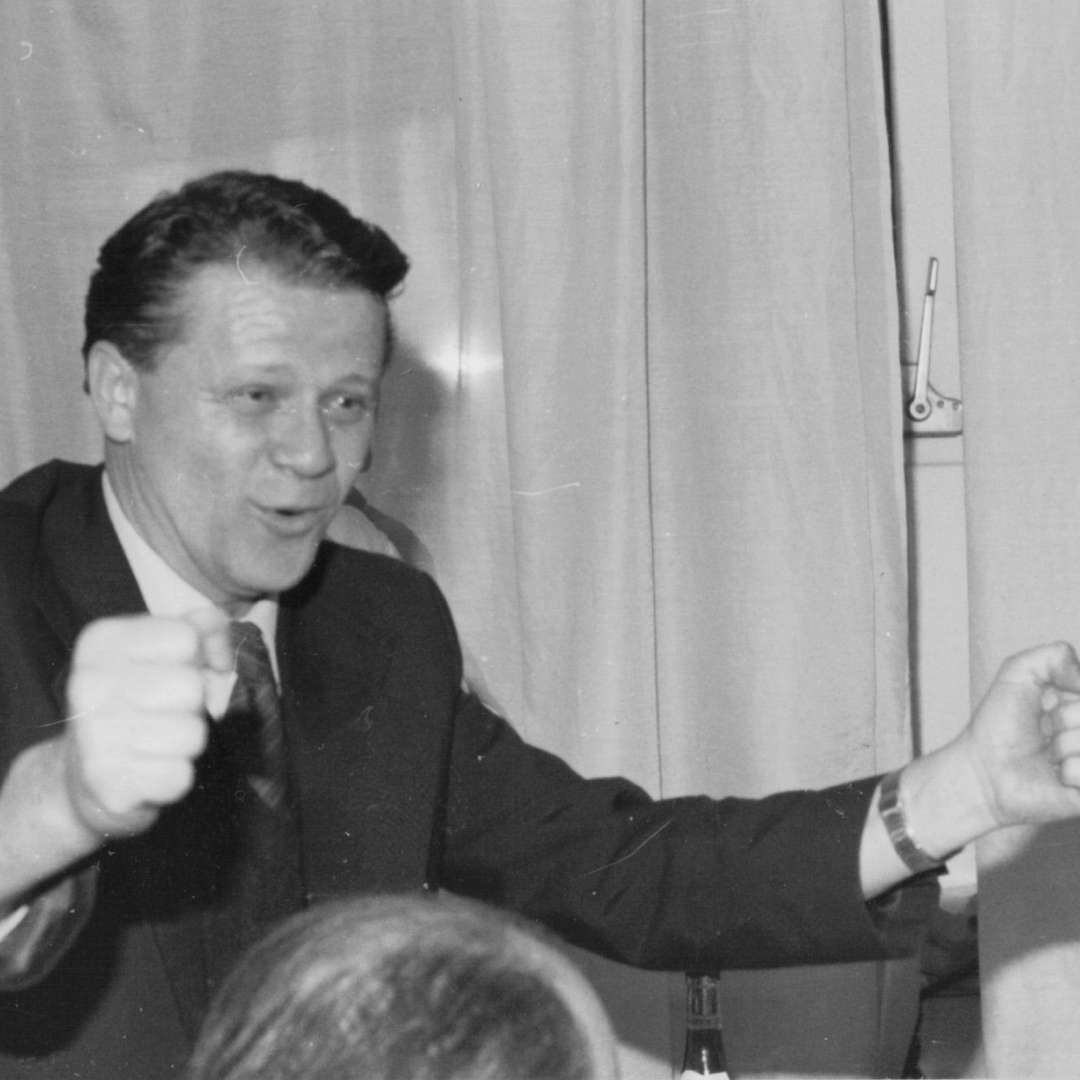
Secret Sarajevo reveals hidden gems, untold stories and unique things to do in Sarajevo through the immersive experience of Planet Sarajevo. The XIV Winter Olympic Games in Sarajevo are remembered for sport, atmosphere, and the spirit of the city. But Sarajevo also impressed the world with something less visible — science and innovation. By 1984, the Olympic movement had already hosted 22 Summer and 13 Winter Olympic Games, yet there were only 11 accredited anti-doping laboratories in the world. In many Olympic host cities, samples had to be sent abroad for testing in specialized laboratories. Sarajevo, however, followed a different path.
The story begins before the Olympic flame arrived in the city. As preparations for the Games intensified, a group of leading scientists in Sarajevo believed that the host city should also demonstrate scientific excellence. Among them was Prof. Dr. Branko Nikolin, one of the leading experts in pharmaceutical and toxicological chemistry in the region. Through professional cooperation and initiative, Yugoslavia became connected with the Medical Commission of the International Olympic Committee, particularly within the sub-commission responsible for anti-doping control.
This opened the door for Sarajevo to develop its own Olympic anti-doping laboratory. At the Institute for Pharmacy and Medical Chemistry in Sarajevo, a team of highly trained scientists established the Olympic Anti-Doping Laboratory for the 1984 Winter Games. The laboratory soon became one of only twelve accredited laboratories in the world capable of performing complex anti-doping analyses for Olympic sport. During the Games, the Sarajevo team conducted the testing and analysis of samples taken from athletes, ensuring that the competition met the highest international standards.
Behind this achievement stood not only technology and scientific expertise, but also an entire academic environment that had been developing for years. A crucial foundation for this success was the Faculty of Pharmacy in Sarajevo, founded in 1973 with the participation of prominent experts including Prof. Dr. Branko Nikolin.
The faculty quickly became a center for advanced studies in drug control, pharmaceutical analysis, and toxicological chemistry. It trained a new generation of pharmacists and scientists whose knowledge made the development of the Olympic laboratory possible.
By the early 1980s Sarajevo had built a scientific community capable of supporting a project of global importance. The work of the Sarajevo laboratory did not go unnoticed. Later in 1984, the report on the anti-doping analyses conducted during the Sarajevo Olympics was presented to the Medical Commission of the International Olympic Committee during the Summer Olympic Games in Los Angeles.
Following the presentation, the president of the IOC Medical Commission sent a letter of congratulations and appreciation to the Sarajevo team—recognizing the professionalism and scientific excellence demonstrated during the Games. It was a moment that confirmed Sarajevo’s place not only on the map of international sport, but also on the map of global scientific achievement.
Today, stories like this are preserved and shared at Planet Sarajevo. Through interactive exhibitions, multimedia interactive storytelling, Planet Sarajevo immersive museum installations reveal how the city once stood at the crossroads of global innovation—from the Olympic Games to groundbreaking scientific institutions and visionary individuals who shaped its legacy.
In Sarajevo, football has never been just a game. For decades, the city has been defined by one of its strongest cultural undercurrents: the rivalry between FK Željezničar and FK Sarajevo. It is a rivalry that stretches far beyond the pitch, rooted in neighbourhood identity, family traditions, and collective memory.
The first official derby between the two clubs was played in 1954. From that moment on, Grbavica and Koševo became more than stadiums — they became symbols. Blue and burgundy were no longer simply team colours; they were markers of belonging. Allegiance was rarely chosen. It was inherited.
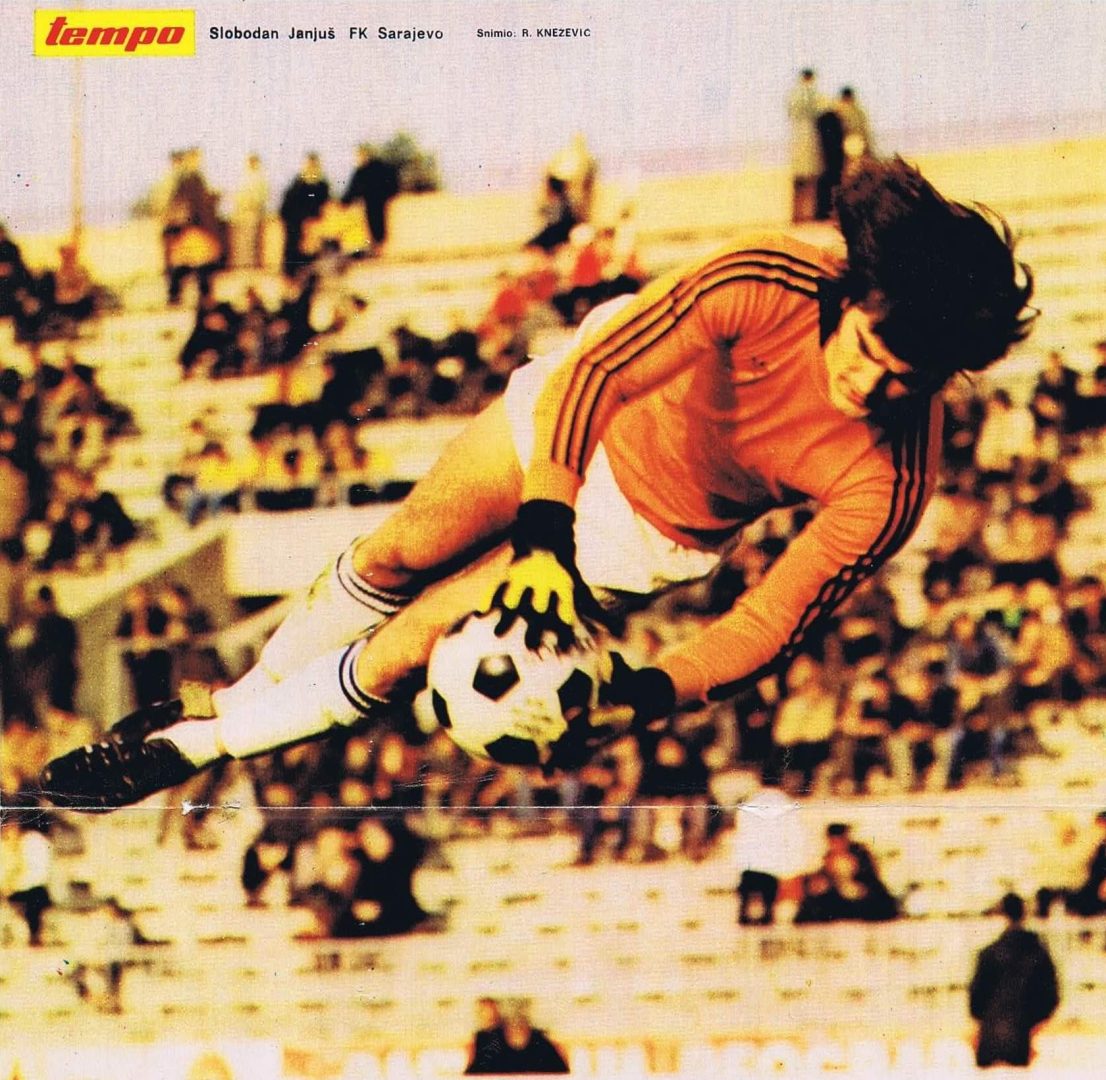
Within such an atmosphere, transfers between clubs were never ordinary professional decisions. They carried emotional weight, often interpreted as statements of loyalty or betrayal. Slobodan Janjuš remains one of the rare figures who crossed that invisible yet powerful line. Having worn the jersey of FK Željezničar before later playing for FK Sarajevo, he occupies a unique place in the city’s sporting memory. His career reflects the complexity of Sarajevo’s football culture — passionate, deeply personal, and never indifferent..
These are not simply sports anecdotes. They are fragments of a broader urban story — one that speaks about identity, resilience, pride, and the intensity with which Sarajevo experiences its own history. At Planet Sarajevo, we explore and reinterpret these moments through immersive multimedia storytelling. By placing individual stories within a wider historical and cultural context, we invite visitors to understand how sport, industry, art, and everyday life together shaped the city’s modern identity
When people talk about Sarajevo attractions, they often mention its old town, history, or film heritage. But there is another story — one that surprises even locals. A story of global ambition, industrial innovation, and design excellence. That story is ŠIPAD, and today it can be discovered at Planet Sarajevo, one of the new museums in Sarajevo and a true hidden gem of the city.
Long before the world became familiar with global furniture brands, Sarajevo was home to an industrial powerhouse. Šipad was not simply a factory or a company — it was a complete ecosystem. From the forests of Bosnia and Herzegovina, ŠIPAD developed a fully integrated system that combined forestry, design, engineering, manufacturing, and international trade.
At its peak, the company employed 85,000 workers, including engineers, designers, architects, and skilled craftsmen. This scale placed Sarajevo firmly on the global industrial map.
At the height of its power, ŠIPAD was the largest European furniture exporter to the United States and Australia. Remarkably, it operated ten of its own furniture factories in the United States, a fact that still astonishes visitors today. ŠIPAD products furnished homes, hotels, embassies, and public buildings across continents. While the world was still learning how to democratize good design, Sarajevo was already exporting it globally.
Generations remember ŠIPAD not only for its scale, but also for its presence in everyday life. Its award-winning TV commercials became part of popular culture, with slogans that are still quoted decades later. These campaigns reflected confidence, modernity, and a belief that design and quality belonged to everyone.
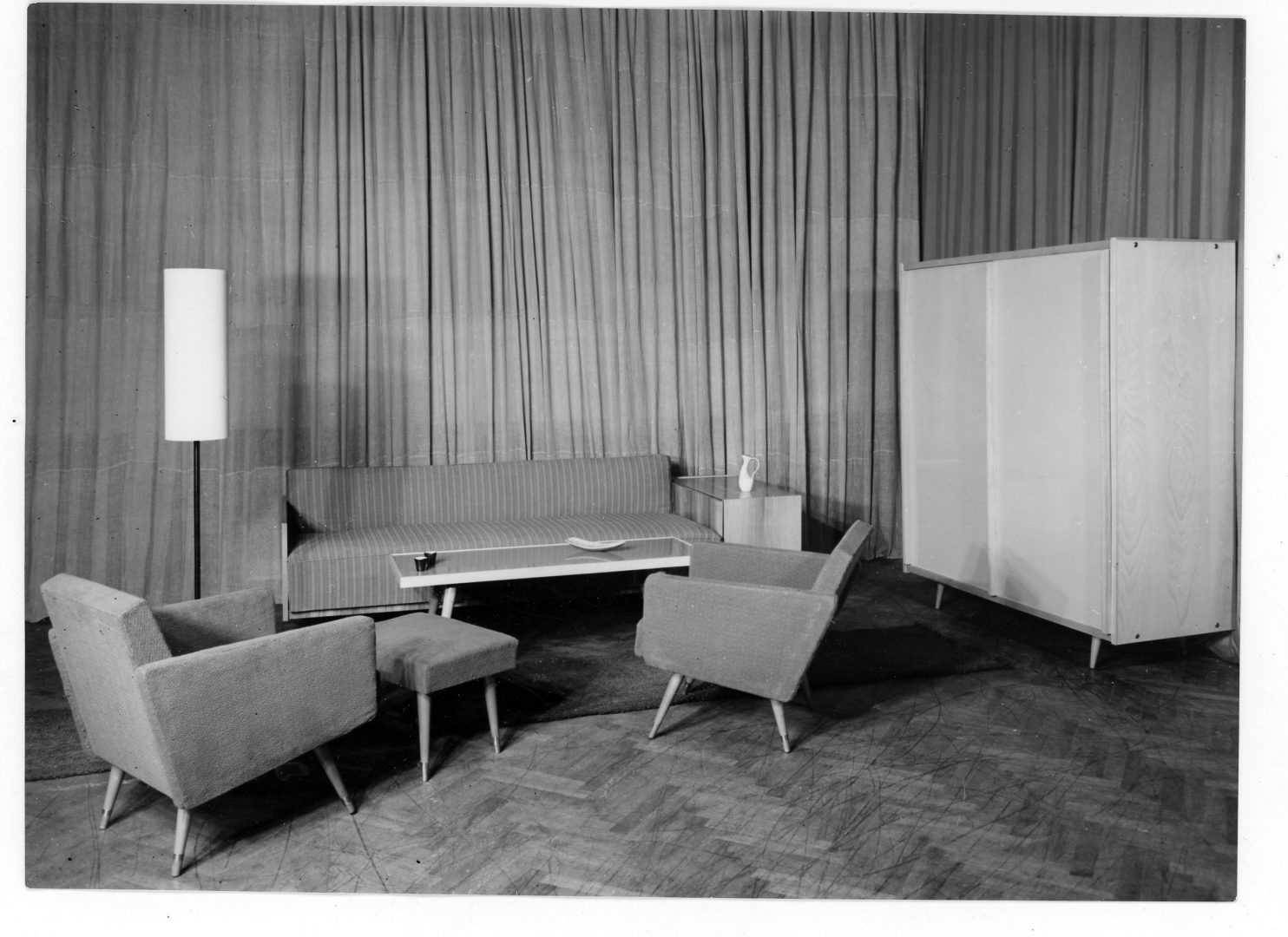

At Planet Sarajevo, the story of ŠIPAD is presented not as nostalgia, but as perspective. It is a reminder that Sarajevo once played in the big industrial league — and knew how to win. Planet Sarajevo stands out among the new museums in Sarajevo by offering immersive storytelling, multimedia exhibits, and narratives that challenge common perceptions of the city. For travellers looking beyond the obvious, it is truly a hidden gem — a place where Sarajevo’s global stories are told with depth, pride, and context. If you want to understand Sarajevo not only as a city of history, but as a city of ideas, ambition, and global influence — the story of ŠIPAD at Planet Sarajevo is essential.
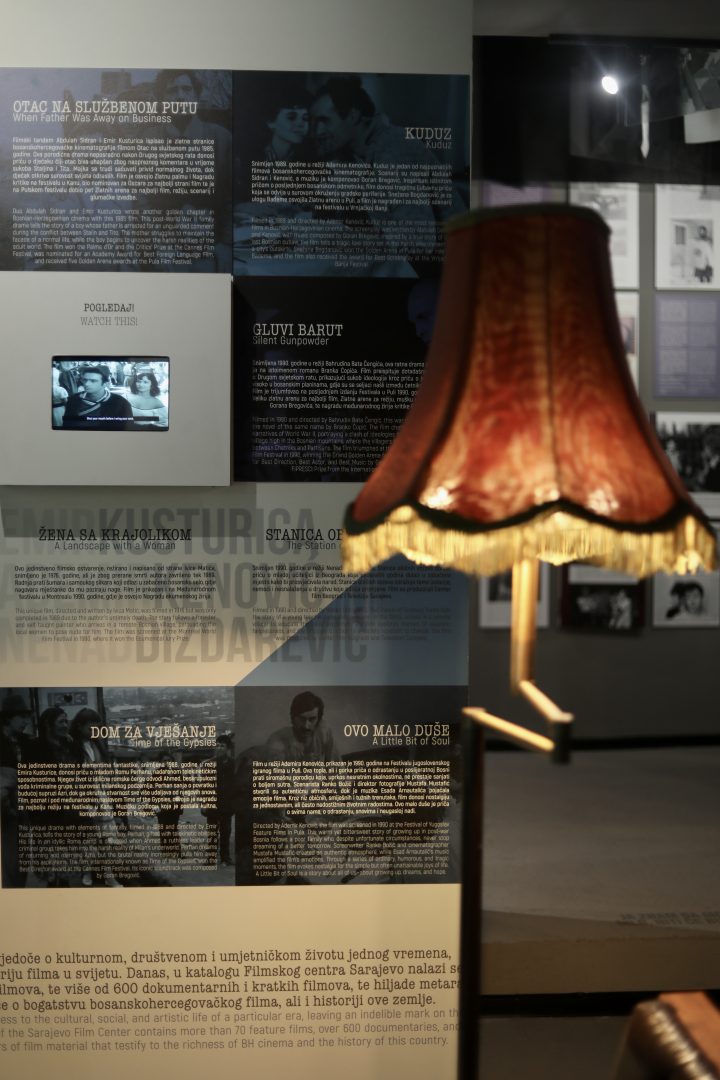
Sarajevo has a long and powerful film tradition, one that predates contemporary recognitions by decades. For generations, film in this city has been a means of expression, resistance, and collective memory. It is precisely this continuity that has led Sarajevo to be recognized today as a UNESCO City of Film—but the city’s cinematic story reaches much further back, deeply rooted in its history, streets, and people.
In such a city of film, one cinematic story became a legend that traveled the world. The energy, emotion, and creativity of Sarajevo are also reflected in its recorded film heritage—Walter Defends Sarajevo, directed by Hajrudin Šiba Krvavac.
The film became the most-watched film in the history of former Yugoslavia, and its global reach was further confirmed when it grew into a cultural phenomenon in China, where it was watched by hundreds of millions of people over the decades. This extraordinary reception made it one of the most-viewed films of its time.
The story of Walter is based on a real historical figure—a partisan underground fighter who defended Sarajevo and who was killed as the last victim of fascists in the city, just before its liberation. In the film’s interpretation, Walter transcends an individual character and becomes a symbol of collective resistance, solidarity, and resilience of a city that has been tested many times throughout history, yet has never lost its character.
At Planet Sarajevo, these stories are not presented as nostalgia, but as living heritage—through film, archival material, multimedia, and contemporary interpretation.

The story of Strip Art is one of Sarajevo’s most powerful—yet still largely unknown—cultural narratives.
It is the story through which the city quietly entered the global history of the comic book world, a legacy that today unfolds within Planet Sarajevo through a carefully curated immersive museum exhibition where history, media, and storytelling intersect.
It all begins in 1971, when a seventeen-year-old from Sarajevo, a passionate comic book enthusiast, writes letters from then-Yugoslavia to the world’s greatest comic artists. He asked for trust. He asked for an opportunity.
And he received both. The artists responded by sending original artwork, collections, and exclusive rights, recognizing the vision and seriousness of a young man named Ervin Rustemagić.
From that trust, Strip Art was born—an independent publishing house and production center that would transform Sarajevo into an international point of exchange for comic artists, collectors, and publishers.
By 1979, Ervin Rustemagić launched Strip Art as an independent entrepreneurial and publishing venture, distributing and promoting some of the most influential comic creators across Europe and the US.
The early 1980s marked a defining moment. In 1983, the Yellow Kid Award—the highest recognition in the comic book industry, often described as its Oscar—arrived in Sarajevo. Just a year later, in 1984, Strip Art and Ervin Rustemagić were named the world’s best comic book publisher, securing Sarajevo’s place in the history of the Ninth Art. Alongside publishing, Ervin Rustemagić played a lasting educational role. As early as 1974, he published Professional Secrets of Comics, a textbook that for decades served as a key reference for young authors and professionals alike. Tens of thousands of copies were printed, and the book remains a cornerstone of comic book education. At Planet Sarajevo, this story is no longer just remembered. It is preserved and brought to life through an immersive museum exhibition that invites visitors to experience Sarajevo from an unexpected perspective. Because this is not a myth. This is Sarajevo. And this is its world comic story.
Did you know about Sarajevo’s urban legend of the New Year’s Eve that changed the city’s music history forever?
On the night of 1969/70, in the newly opened Skenderija, the Sarajevo band Čičak set a world record by playing live for 26 continuous hours in front of an audience. The lineup — Paša, Gagi, Zoka, and Mića — kept the city awake as the crowd rotated, but the music never stopped.
That summer, the Niš-based band Daltoni briefly took over the record with 28 hours of nonstop performance. But the challenge was soon answered.
At the beginning of 1970, Sarajevo’s own Kodeksi reclaimed the record, pushing the limits even further with an astonishing 32 hours of uninterrupted music. Every hour, a candle was lit — and when the 32nd candle burned, the audience erupted in ovation and celebration.
That same spirit, energy, and passion still live on today through the Pop-Rock School. Sarajevo. Then. Now. Always — rock music.

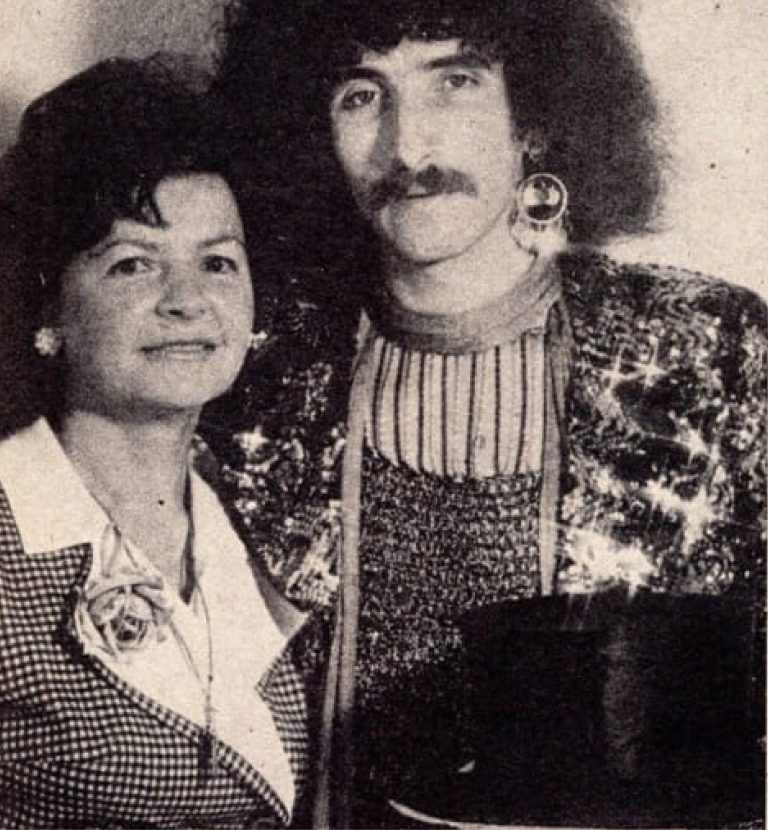
The song ‘Selma’ was born from a brief, quiet encounter. Selma Borić, a young woman from Zenica who attended the All Girls’ High School in Sarajevo, often travelled home by train on weekends.
On one such day, she met the poet Vlado Dijak. He carried her small, dark-red suitcase, walked her to the train and, noticing the broken window beside the seat she had chosen, called out: ‘Selma, don’t lean out of the window.’
From that sentence — from a glance and an unspoken love — came the verses later set to music by Goran Bregović and sung by Željko Bebek. For a long time, Selma did not even know the song was dedicated to her; only years later did she realise she had become part of music history. They never kissed. He never told her he loved her. But she remained forever — Selma from the song.
Planet Sarajevo is realized with the support of BH Telecom, Sarajevska Pivara, NLB Bank, and Kömmerling, and the Federal Ministry of Tourism and Environment and the City of Sarajevo.

Imagine Sarajevo in the 1970s. A city where people didn’t just dream — they built. A city where computers were born. Yes, computers. And not just any computers, but ones that would travel all the way to China. While the rest of the world was only beginning to understand what a personal computer was, Sarajevo’s Energoinvest was taking apart an IBM to create its own.
And it succeeded: the IRIS PC was born — the first BH computer, developed without a single foreign license. Then came the 1980s — and a bold new leap. The IRIS PC 16, faster than IBM, with double the memory, more stable and more advanced, became a symbol of local technological power. A computer from Sarajevo that cost as much as a Yugo, yet carried the value of an entire idea of the future.
At the same time, Energoinvest wasn’t only building computers. It was producing motherboards for American companies. Developing border-control software for the People’s Republic of China. And — perhaps most astonishing of all — training 5,000 Chinese engineers, directly from Sarajevo. It sounds unreal. But it’s true. Behind it all stood a company founded in 1951, which grew into a giant with 11 research centers. Institutes, laboratories, innovations, experiments… Sarajevo had its own city of knowledge — a system few places in the world could match.
This is the story of Energoinvest. The story of a Sarajevo that built technology for the world. A story that reminds us of one thing: this city didn’t just follow the future — it created it.
Planet Sarajevo is realized with the support of BH Telecom, Sarajevska Pivara, NLB Bank, and Kömmerling, and the Federal Ministry of Tourism and Environment and the City of Sarajevo.
Did you know that Jazz Fest Sarajevo, one of the most important music festivals in the region, is not only a story about contemporary jazz — but also about the city’s long and rich jazz tradition?
Long before the first festival stages and international performances, this city already had its rhythm, its improvisations, and its own jazz masters. As early as the 1950s, while the world was still recovering from the war, Sarajevo was breathing to the rhythm of music. Jazz could be heard at Sloga, FIS, the Gajret building, and during dance evenings at the Workers’ University. Every hall had its own orchestra, and every night — its refrain.
Orchestras led by Miljenko Cvjetković, Jakica Gutman, Dušan Mladen Stojanović, and the Mordo Orchestra filled the city with sound, while musicians from the Opera and Ballet added a touch of virtuosity to the growing Sarajevo scene.
One name, however, stands out as the beginning of Sarajevo’s modern musical story — Slavko Hitri. With his sextet, he was a pioneer of instrumental music and the first musician to record regularly for Radio Sarajevo. His jazz was more than sound — it was an attitude, an expression of freedom and openness to the world. From the New Year’s Eve celebration of 1955 at Hotel Central to the unforgettable nights at Sloga, jazz became the symbol of urban Sarajevo. Through the 1960s and 1970s, it moved from dance halls to radio waves, from orchestras to small quartets — from notes to memories.
Today, that spirit lives on in Planet Sarajevo — a multimedia museum that preserves the stories, sounds, and emotions of a city that never stopped playing. And every autumn, when Jazz Fest Sarajevo once again fills the streets with notes of improvisation, it feels as if the city is simply continuing a melody it has been playing for more than seven decades. Because jazz in Sarajevo was never just music. It was a way of life. The sound of freedom. And proof that this city has always had its own rhythm.
Planet Sarajevo is realized with the support of BH Telecom, Sarajevska Pivara, NLB Bank, and Kömmerling, and the Federal Ministry of Tourism and Environment and the City of Sarajevo.

Did you know that Sarajevo played a key role in the creation of the barcode — the symbol without which we can hardly imagine going to a store today? Yes, right here, in the heart of Bosnia and Herzegovina, began the story of the lines that changed the world of commerce.
Back in 1975, the Sarajevo-based company UPI was part of a global project that laid the foundation for the modern way of shopping. At the center of that story was Muhamed Ćatić, a visionary and innovator who took part from the very beginning in developing the European Article Numbering (EAN) system — known today as the barcode.
UPI Sarajevo received the very first number — 0001 for Yugoslavia — forever inscribing this city into the global history of technology and trade. But the story doesn’t end there — Ćatić later helped implement the barcode system around the world, from India to the United Arab Emirates.
So, next time you see a barcode, think of Sarajevo — and visit Planet Sarajevo to discover stories of vision, knowledge, and courage from a city that understood the future long before the digital age.

Planet Sarajevo is realized with the support of BH Telecom, Sarajevska Pivara, NLB Bank, and Kömmerling, and the Federal Ministry of Tourism and Environment and the City of Sarajevo.
On October 4th, Sarajevo hosted the opening of the 65th edition of the International Theater Festival of Small and Experimental Stages – MESS. For decades, this festival has been not only a stage for artistic avant-garde but also a meeting place for world theaters and the local audience.
MESS has always been more than a festival. It has been a gathering of bold ideas and global artistic voices. Theaters that transformed the course of performing arts—such as the legendary Living Theater from New York—have graced Sarajevo’s stages.
That very performance left a lasting impression and inspired many, among them our great Josip Pejaković, who often said that the Living Theater was the driving force and inspiration behind his iconic monodrama Oj, živote.
Today, at Planet Sarajevo, we preserve the memory of those defining moments and share a multimedia story about Josip Pejaković—about art that inspired generations. Planet Sarajevo invites you to discover the spirit of MESS and the enduring power of theater that continues to live on.
Planet Sarajevo is realized with the support of BH Telecom, Sarajevska Pivara, NLB Bank, and Kömmerling, and the Federal Ministry of Tourism and Environment and the City of Sarajevo.

In the period following the Second World War, Sarajevo was building a new story, rejecting rigid socialist realism and choosing a different path – a blend of internationalism, originality, and deep respect for its own tradition. This gave rise to the Sarajevo School of Architecture, also known as the Sarajevo Architectural Circle, which placed the city within the most significant currents of Yugoslav and global architecture.
The first generation of architects, formed as early as the 1930s, brought the spirit of the avant-garde into the city. The second, connected to the founding of the Technical Faculty in Sarajevo in 1949, shaped a recognizable balance between modernism and tradition – a fusion of global trends and the soul of Sarajevo. Art historian Snješka Knežević described this spirit as ‘a technical culture without complexes, respectful of old Sarajevo yet avoiding kitsch,’ while academic Ivan Štraus emphasized that the ‘circle’ did not signify uniformity but rather freedom, a plurality of expression, and authenticity in comparison to other centers with longer traditions.
In the late 1970s, Sarajevo reached a kind of peak: no fewer than three federal awards for the best architectural achievements went into the hands of Sarajevo’s architects. The works of Štraus, Muhasilović, Đanković, and Neidhardt were recognized worldwide – from Skenderija and the Museum of Aviation in Belgrade, to the PTT building in Addis Ababa, and the opera house in Sofia.
This was the moment when Sarajevo, through architecture and ideas, stood shoulder to shoulder with the greatest European centers. For Sarajevo’s architects, the key period stretched from the construction of Skenderija in 1969 to the buildings erected for the 1984 Winter Olympic Games.


These were the years when every new building became a symbol of energy, and Sarajevo twas transformed into an open laboratory of ideas. Today, you can discover this story at the Planet Sarajevo multimedia center. On the interactive architectural table, with a single touch, you can explore the city map and get to know its most celebrated buildings. This experience offers researchers, architecture enthusiasts, and all curious visitors the chance to relive how a city that shaped its identity through architecture.
Planet Sarajevo is realized with the support of BH Telecom, Sarajevska Pivara, NLB Bank, and Kömmerling, and the Federal Ministry of Tourism and Environment and the City of Sarajevo.
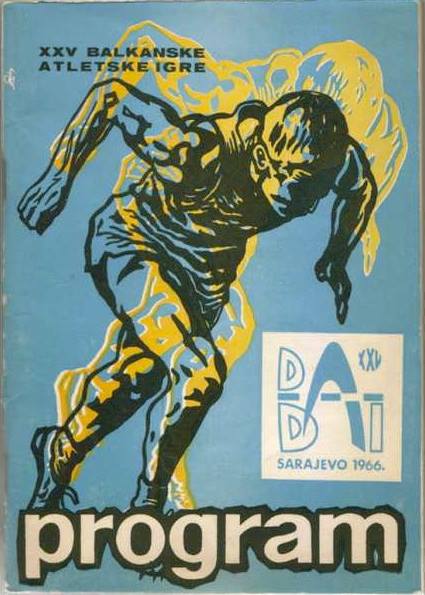
When we look at modern athletic tracks today, it’s hard to imagine that back in 1950 Sarajevo already had something considered a real luxury at the time – a tartan track! Koševo Stadium, now known as Asim Ferhatović Hase Stadium, was built in 1947, and just three years later it was equipped with an athletic track made from the plastic materials available at the time.
It was a pioneering achievement, among the very first in all of Yugoslavia. Koševo soon became the center of athletics in the region – the track was reconstructed in 1966 for the Balkan Athletics Games and expanded to eight lanes. Only a few years later, in 1970, the stadium received a proper tartan surface, like those still used today, as part of preparations for the European Cup semifinal in athletics, when Sarajevo hosted numerous national teams from across Europe. But that’s not all – at the time, Koševo was also an architectural marvel. According to architect and publicist Mufid Garibija, the central grandstand built in the mid-1960s, with a covered section for special guests, was the largest concrete cantilever structure in all of Yugoslavia.
‘It was strange to see that mass of concrete standing on a cantilever,’ Garibija recalled, also mentioning the surprise of English journalists who covered matches at Koševo. In May 1966, another great innovation began – the installation of electric floodlights. By the end of August that year, Koševo became the first stadium in Bosnia and Herzegovina with modern lighting, which at the time in Yugoslavia existed only at the JNA Stadium in Belgrade. Four gigantic 46-meter-high towers, 334 floodlights, and power in the tens of thousands of watts turned Koševo into the sporting jewel of the region.
Its construction also carried special symbolism. The stadium was designed by Anatoliy Kiryakov and Vaso Todorović, while youth brigades from across Bosnia and Herzegovina – from Sarajevo to Banja Luka – worked on its building together with German prisoners of war. It was a project of unity, sport, and the future. Today, when we talk about sports in Sarajevo, Koševo still holds a special place in the hearts of football and athletics fans. And all of these fascinating details about its past can be found in the striking exhibition at Planet Sarajevo, which presents a unique story about the development of sports and city stadiums through the decades.
Planet Sarajevo is realized with the support of BH Telecom, Sarajevska Pivara, NLB Bank, and Kömmerling, and the Federal Ministry of Tourism and Environment and the City of Sarajevo.
At the Planet Sarajevo multimedia museum, a special artifact is preserved—the pointe shoes in which renowned artist Edina Papo prepared for the 1981 production of Swan Lake on the stage of the National Theater Sarajevo. ‘What I lived through as a ballerina—putting on those shoes, rising onto the tips of my toes, and dancing in them—are moments I will never forget.
Each one was, for me, the most beautiful thing in the world. That’s why I gladly donated them to Planet Sarajevo—to remain as a memory, so people can see them up close and feel a piece of that beauty,’ says Papo. For her, pointe shoes are much more than footwear: ‘They are a symbol of my being, my body, and all those countless rehearsals in the ballet studio.
They’re also a symbol of classical ballet—a global art that demands tremendous knowledge, academic rigor, and skill.’ Papo stepped onto the National Theater stage at just 16, and on that stage performed works such as Swan Lake, Giselle, Don Quixote, and The Sleeping Beauty. She also recalls a time when Sarajevo was an important ballet center in the former Yugoslavia: ‘In the 1960s, 70s, and 80s, we had an incredible opportunity to learn from the best. Our wonderful principals and soloists came from modest ballet schools, but behind them stood brilliant pedagogues—students of great Russian ballerinas and dancers.’
We had a society that invested in culture, that wanted to create a sense of well-being and beauty, and to make elite art accessible to everyone.’ As Director of the Ballet at the National Theater Sarajevo, Papo founded Ballet Fest Sarajevo—a festival that still connects ballet dancers from around the world and creates opportunities to exchange knowledge and artistic skills. When you step into Planet Sarajevo and see those pointe shoes, you’re not just looking at an artifact—you’re looking at a ticket into a moment in time, a stage, and an artistic heart that placed Sarajevo on the world map of ballet.
Planet Sarajevo is realized with the support of BH Telecom, Sarajevska Pivara, NLB Bank, and Kömmerling, and the Federal Ministry of Tourism and Environment and the City of Sarajevo.
